Plate Carrier Manufacturer Guide: Fabric, MOLLE, Hardware and MOQ
- Share
- publisher
- WildHawk Outdoor Products
- Issue Time
- Nov 4,2026
Summary
A buyer's guide to sourcing custom plate carriers: 500D Cordura shells, laser-cut vs sewn MOLLE, quick-release hardware, fit bands, the five QC checkpoints worth writing into the purchase order, and MOQ 100 pcs OEM terms from the Huadu factory.
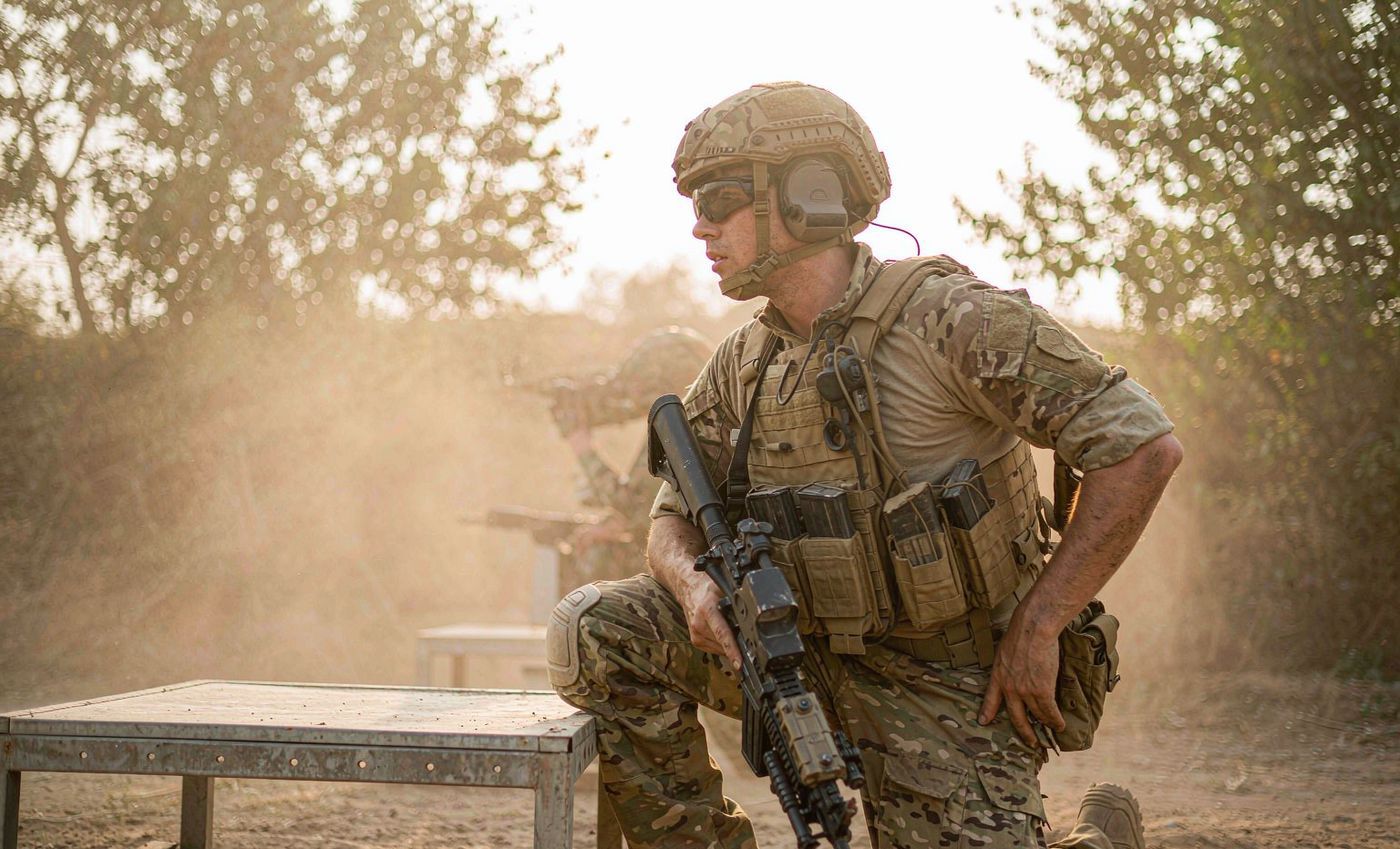
A plate carrier is a chassis, not a vest. It holds ballistic panels or dummy plates, carries pouches on a MOLLE face, and has to survive daily training without the stitching or the buckles becoming the failure point. For a buyer sourcing from a factory, the programme is decided by four things: shell fabric, MOLLE construction, hardware and the fit system. The two carrier programmes in this guide are built by WildHawk Outdoor Products, the tactical gear factory behind www.wildhawkgear.com.
Quick answer: what OEM means for a plate carrier
OEM means the carrier is built to your specification — your pattern, your MOLLE layout, your hardware set, your label. ODM means you start from a carrier the factory already builds, such as the APC-01, and adjust colour, webbing layout and branding. Most first orders start ODM and move to full OEM from the second season, once the fit is proven.
- What actually decides a plate carrier build
- Laser-cut vs sewn MOLLE
- Hardware: quick-release and buckles
- Sizing: one platform, three fit bands
- The two carrier programmes we build
- From sample to bulk: the timeline
- Quality checkpoints to write into the purchase order
- MOQ and what drives the price
- Frequently Asked Questions
- Plan Your Plate Carrier Programme with WildHawk
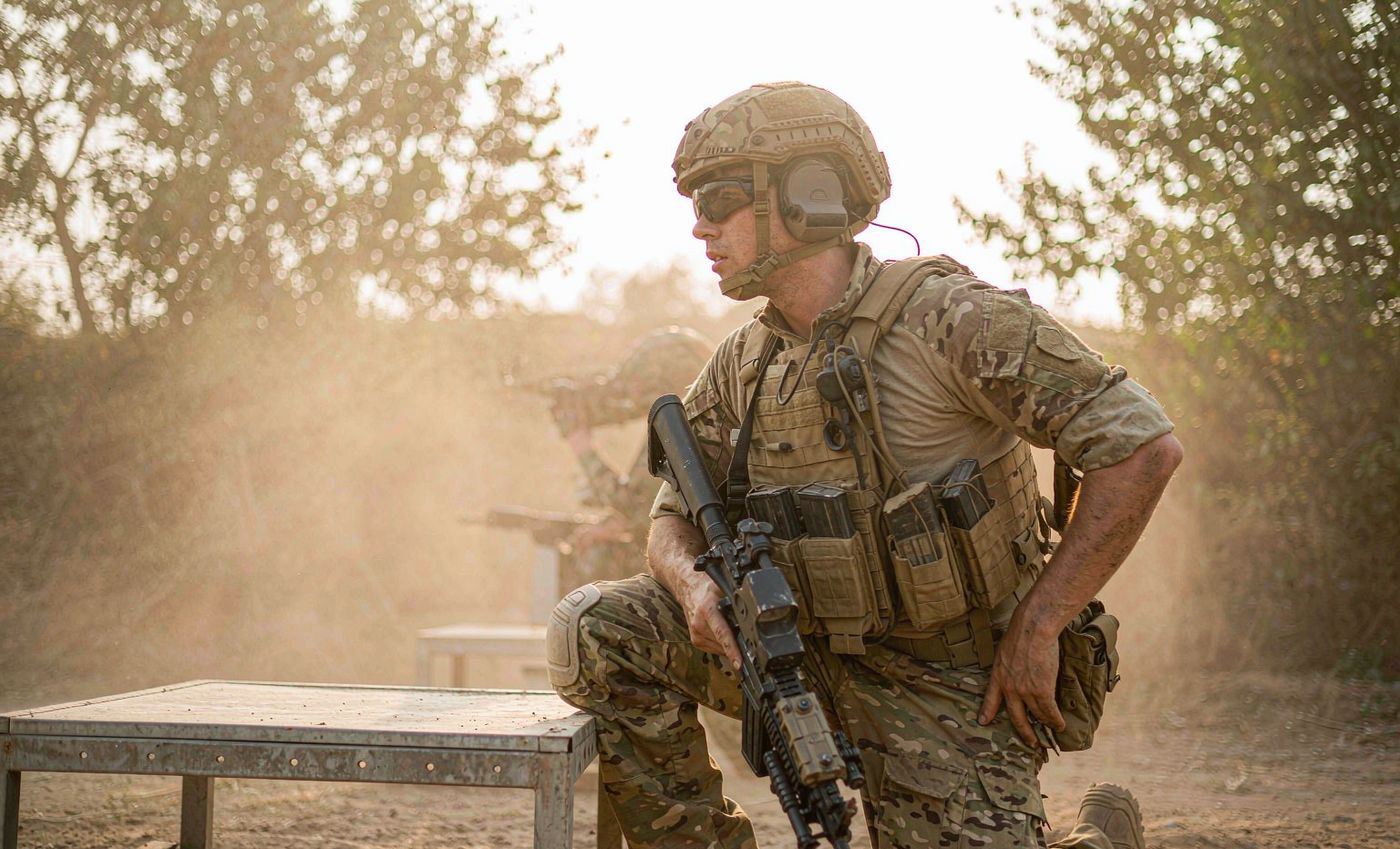
What actually decides a plate carrier build
Two carriers that look similar on a product page can be separated by a 30 percent cost gap and a much bigger durability gap. These are the four specifications worth locking before you ask for a quote.
Shell fabric
500D Cordura nylon is the standard for duty and training carriers. 1000D adds abrasion life at a weight and cost penalty. A DWR finish keeps the shell stable in wet training conditions.
MOLLE construction
Laser-cut laminate or sewn PALS webbing. The choice changes weight, edge durability, sewing time and the look of the face panel more than any other single decision.
Hardware
Quick-release buckles on the shoulders and sides, acetal or metal, define both the donning speed and the perceived quality. Brand hardware (Duraflex, ITW, Woojin) raises unit cost and retail positioning together.
Plate bags and fit
Standard 10 x 12 in bags cover most programmes. Padded shoulders, an adjustable cummerbund and a drag handle complete the chassis and decide whether it fits over body armour or a jacket.
Laser-cut vs sewn MOLLE
This is the first crossroads in any carrier programme, and it is worth deciding with the cost table in front of you rather than by trend.
| Factor | Laser-cut MOLLE | Sewn PALS webbing |
|---|---|---|
| Weight | Lighter — laminate replaces webbing rows | Heavier — webbing adds 60 to 100 g per panel |
| Edge durability | Sealed edges, no fray | Webbing ends must be boxed or bar-tacked |
| Sewing time | Lower — fewer stitch lines | Higher — each row is stitched twice |
| Look | Flat, low-profile face | Traditional tactical texture |
| Best for | Duty, training, premium retail | Budget programmes, heavy-abuse contracts |
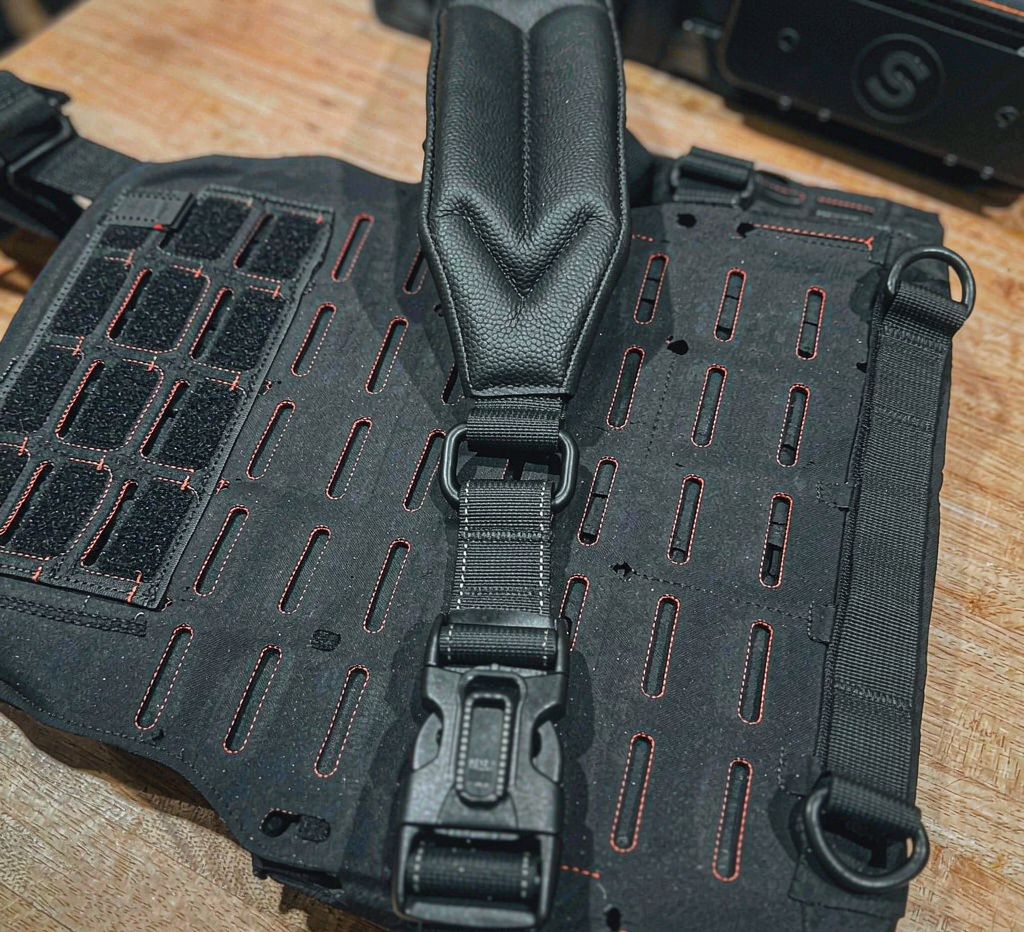
The plate carrier line we build uses laser-cut laminate on the APC-01; the same cut files can be switched to sewn webbing if your market expects it. Comparing the two faces side by side on a sample is faster than any specification debate.
Hardware: quick-release and buckles
Hardware is where buyers most often overspend or underspend. Match it to the user, not to the catalogue.
Quick-release system
Shoulder and side QR buckles let the wearer drop the carrier in seconds. Standard on duty and training carriers; skip it only on the lowest-cost brackets.
Acetal vs metal buckles
Acetal is light and cost-stable; metal hardware raises perceived value for premium retail. Both should be cycle-tested beyond 5,000 operations before approval.
Drag handle
A reinforced rear handle bar-tacked through the panel. It is one of the highest-stress points on the carrier and a common claim source when it is stitched light.
Branded hardware
Duraflex, ITW or Woojin parts can be specified from 100 pcs upward. Branded hardware is a visible quality signal end users check first.
Sizing: one platform, three fit bands
Carrier sizing is simpler than garment sizing because the cummerbund does the adjustment, but the platform still has to match the user population.
- Plate size: 10 x 12 in covers most programmes; SAPI-cut bags for military contracts.
- Cummerbund range: spec the adjustment range for your market, not a universal band — EU and US body ranges differ.
- Shoulder pads: removable padding matters when the carrier is worn over body armour.
- Height of the front panel: must clear the belt kit and not block the magazine reach.
Approve a fit block on one real wearer per band before sampling. It removes most of the return risk for the size run in one round.
The two carrier programmes we build
| Model | Build | MOQ | Positioning |
|---|---|---|---|
| APC-01 | 500D Cordura, laser-cut MOLLE, quick-release, 10 x 12 bags, 1.35 kg | 100 pcs | Duty, training and outdoor programmes |
| CBV-04 | Low-profile concealable shell, panels to specified level, reports supplied | 50 pcs | Discreet protection programmes |
Both run through the same lines as the load-bearing vests, so a mixed container of carriers and vests shares tooling and inspection standards.
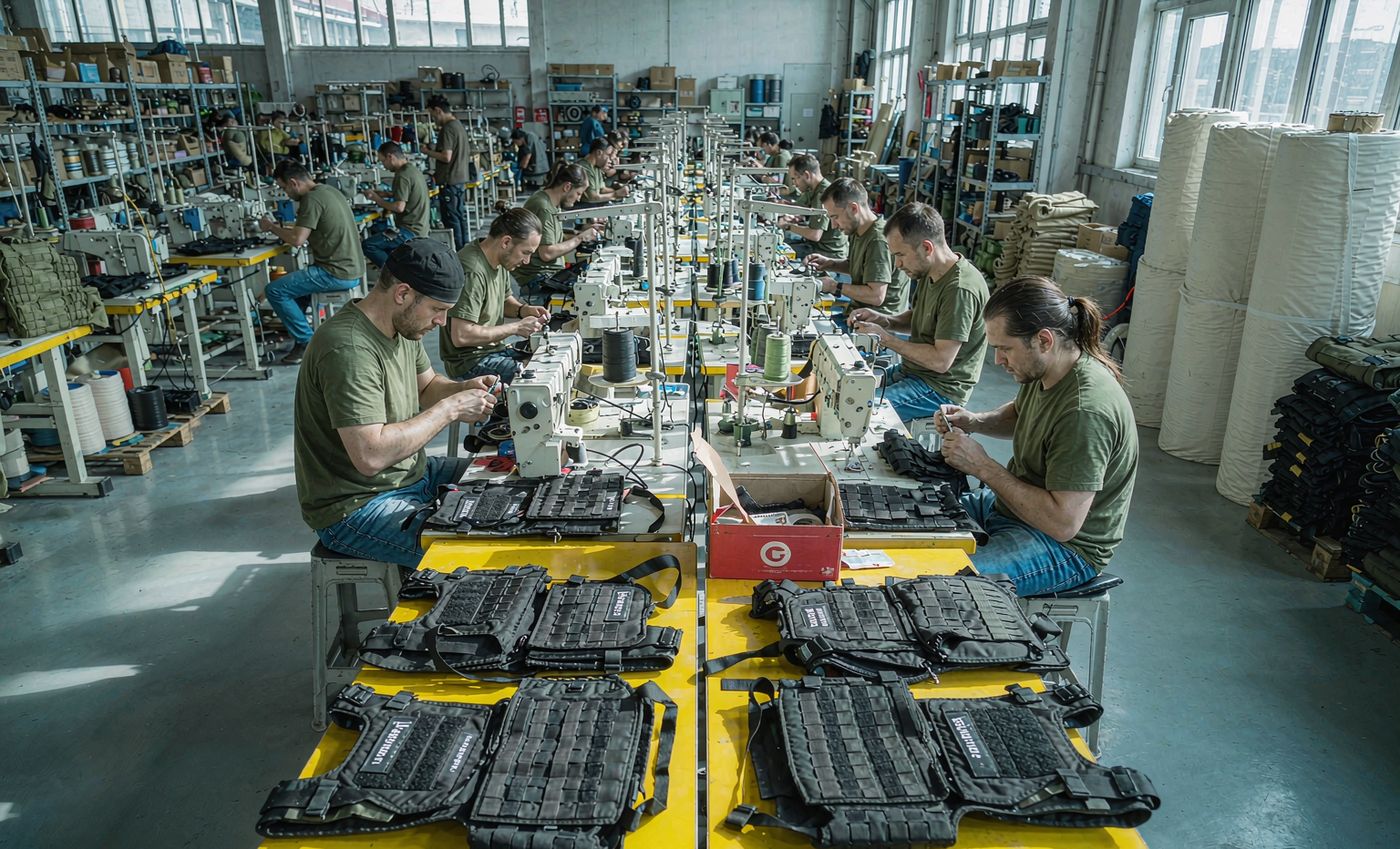
Where these carriers are built
WildHawk Outdoor Products (www.wildhawkgear.com) sews the carrier line in its own workshop in Huadu, Guangzhou. Samples come back in 7 to 10 working days, bulk runs in 15 to 25, every order gets a final AQL inspection, and a photo and measurement report goes to the buyer before balance payment. Third-party inspectors are welcome.
From sample to bulk: the timeline
- 01
Specification
Fabric, MOLLE type, hardware set, plate size and colour confirmed in writing.
- 02
Sample
7 to 10 working days from an existing block; new patterns take longer.
- 03
Fit and load check
Sample worn with weight, QR cycle-tested, comments folded into the pattern.
- 04
Bulk production
15 to 25 working days: cutting, laminate, assembly, hardware setting.
- 05
Inspection and packing
AQL final inspection, measurement report, then cartons with your labels and hangtags.
A first carrier order usually lands 6 to 8 weeks from approval to FOB Guangzhou. Repeat orders skip development and run straight to production.
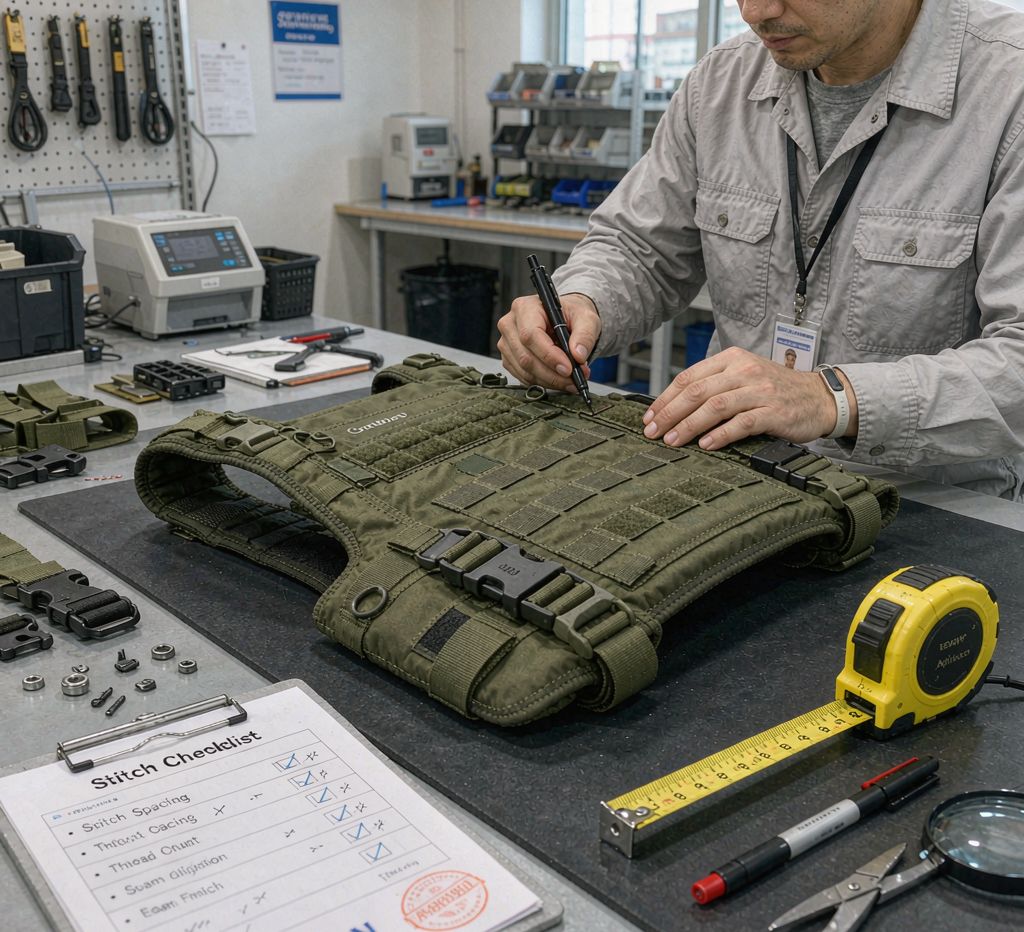
Quality checkpoints to write into the purchase order
Five checks that prevent most claims
- Bar-tacks at the drag handle, QR anchors and every loaded webbing end.
- Buckle cycle test beyond 5,000 operations on the quick-release set.
- Slot integrity check on laser-cut panels — no lifted laminate at the edges.
- Measurement check across the size run against the approved chart, in writing.
- Colourfastness and DWR check on the shell, especially for Multicam and custom colours.
MOQ and what drives the price
Custom plate carriers start at 100 pieces per style. Concealable programmes start at 50 because panel sourcing, not labour, sets the floor.
Cost drivers
Shell denier, laser-cut vs sewn MOLLE, hardware brand, plate bag count, camouflage print and how many sizes the run splits across.
Colour options
Ranger Green, Coyote, Black, Wolf Grey and Multicam cover most programmes from stock. Pantone-matched dyeing needs a dye-lot minimum, which is why custom colours price better above 300 pcs.
Frequently asked questions
What fabric do you recommend for a duty plate carrier?
500D Cordura nylon with a DWR finish. It balances abrasion life, weight and cost for daily training. 1000D suits contracts where the carrier sees heavy ground contact.
Laser-cut or sewn MOLLE — which should we choose?
Laser-cut for duty, training and premium retail; sewn webbing for the lowest cost bracket or heavy-abuse tenders. Both can be quoted from the same pattern, so compare samples before deciding.
What is the MOQ for a custom plate carrier?
100 pieces per style from the existing block, with your colours, webbing layout and branding. Sample orders run well below that to approve fit and hardware first.
Can you supply test reports for ballistic panels?
Yes. Panels are built to the level you nominate for your market and the test reports and certification documents ship with the order. Destination-market rules are confirmed before production.
Plan Your Plate Carrier Programme with WildHawk
A plate carrier programme is decided by four specifications: shell fabric, MOLLE construction, hardware and fit. Lock those in writing, approve the fit block on a real wearer, and write the five inspection points into the purchase order. Sample time, unit cost and packing all follow from those decisions. Current carrier specifications and hardware options are published at www.wildhawkgear.com.