Tactical Dog Harness Sourcing: A Factory's Guide to No-Pull Vest Harnesses, MOQ and QC
- Share
- publisher
- WildHawk OEM Team
- Issue Time
- Nov 24,2026
Summary
A factory-written sourcing guide to tactical dog harnesses: why no-pull vest-style harnesses anchor the working-dog category, how chest-plate load distribution and dual grab handles work, size runs M-XL for 15-60 kg dogs, the OEM patch-panel branding checklist, MOQ from 200 per colorway, samples in 3-5 days, bulk in 15-25 days, and six QC checks to write into your purchase order.
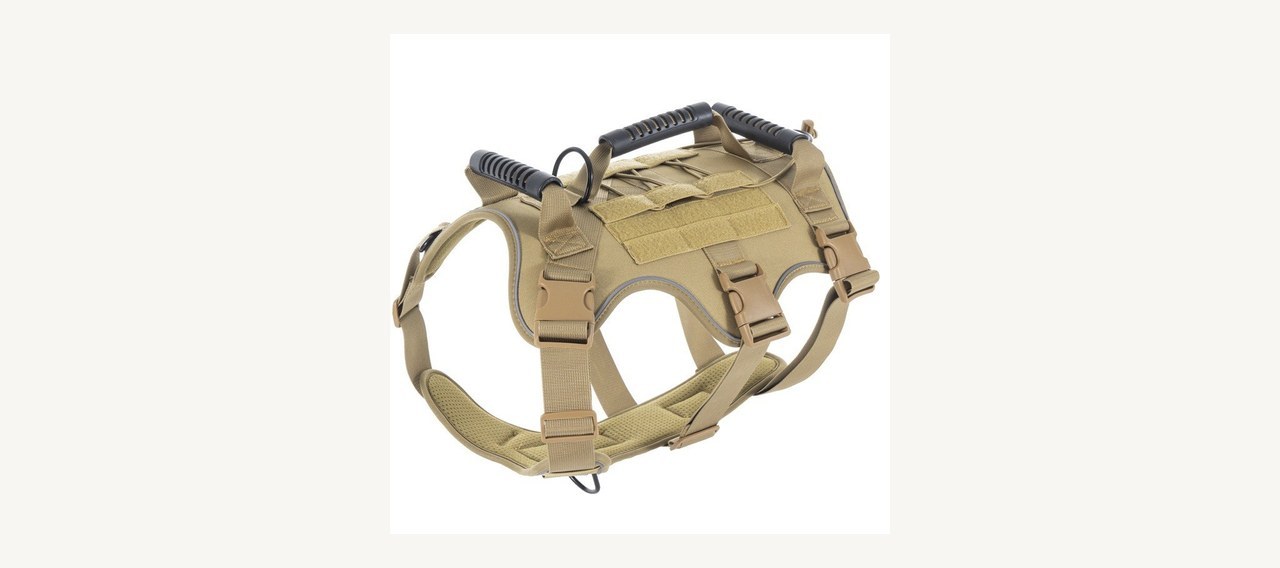
Tactical Dog Harness Sourcing: A Factory's Guide to No-Pull Vest Harnesses, MOQ and QC
Written by the WildHawk OEM Team — tactical gear manufacturer, Guangzhou (Huadu) sewing floor.
The short version for buyers: the anchor SKU of the working-dog category in 2026 is a no-pull vest-style tactical harness — chest-plate load distribution, dual grab handles, a MOLLE and loop patch panel that doubles as your brand billboard, and a size run from M to XL covering 15–60 kg dogs. Order samples in 3–5 days, MOQ from 200 pieces per colorway with mixed sizes and colors in one PO, bulk production in 15–25 days, and six QC checks written straight into the purchase order. This guide walks through the sourcing logic our factory uses with pet brands, distributors and professional K9 dealers — the same logic we apply on the line that also builds our vests and pouches.
What This Guide Covers
- Why tactical dog harnesses are one of the fastest-growing pet categories
- What "tactical dog harness" actually means for a B2B order
- No-pull by design: why vest-style beats everything else
- Inside the factory: how a vest-style harness is actually built
- Size runs and fitting: the detail that decides your return rate
- The OEM customization checklist
- MOQ, samples, lead time and price drivers
- Six QC checks to write into your purchase order
- Our no-pull vest harness: factory-direct configuration
- FAQ
1. Why Tactical Dog Harnesses Are One of the Fastest-Growing Pet Categories
Working-dog gear has crossed over from a professional niche into mainstream pet retail. Market researchers size the global working dog harnesses, vests and packs market at roughly USD 1.2 billion in 2026, projected to reach about USD 2.2 billion by 2033 — a compound growth rate above 8% — and tactical harnesses hold the largest share of that spend. North America leads demand, followed by Europe, and the same products now sell through three very different channels at once: professional K9 programs, outdoor and adventure retail, and consumer marketplaces where "military-style" pet gear is a visual trend of its own.
For a wholesale buyer, the tactical harness is the category's anchor SKU for three reasons. First, it carries the highest perceived value in the dog-walking aisle — buyers accept premium pricing for load-bearing construction they can see. Second, it attaches naturally to accessories: bungee leashes, collars, patches and pouches all sell alongside it, which multiplies basket size. Third, the loop patch panel makes every unit a walking advertisement — once a customer adds your brand patch, the harness markets itself at every dog park. And the specification that has become non-negotiable across all three channels is the same: no-pull. Marketplace data shows it is now a baseline requirement on best-selling harnesses, not an optional extra.
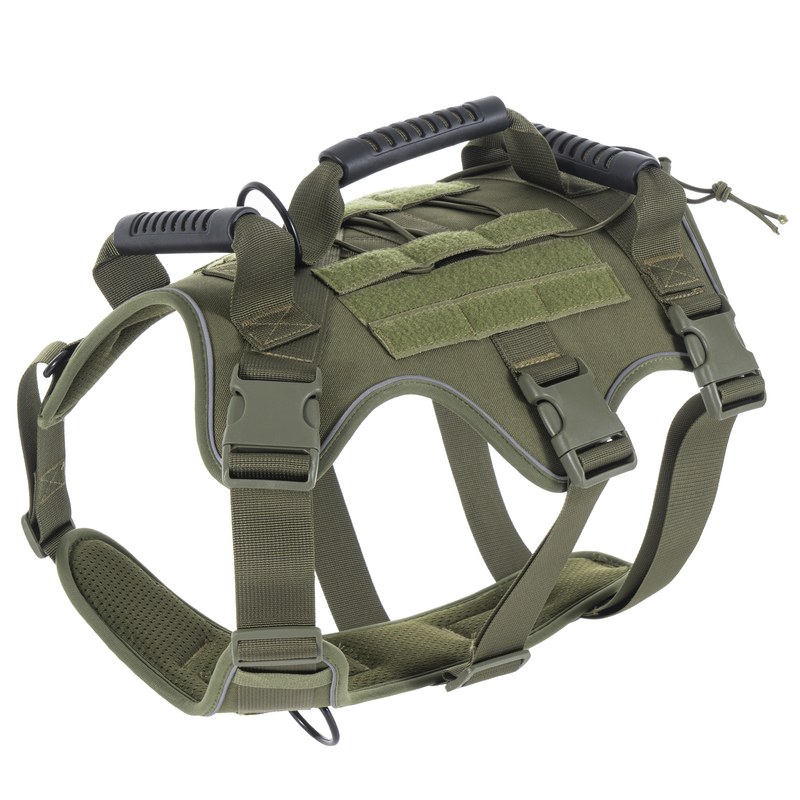
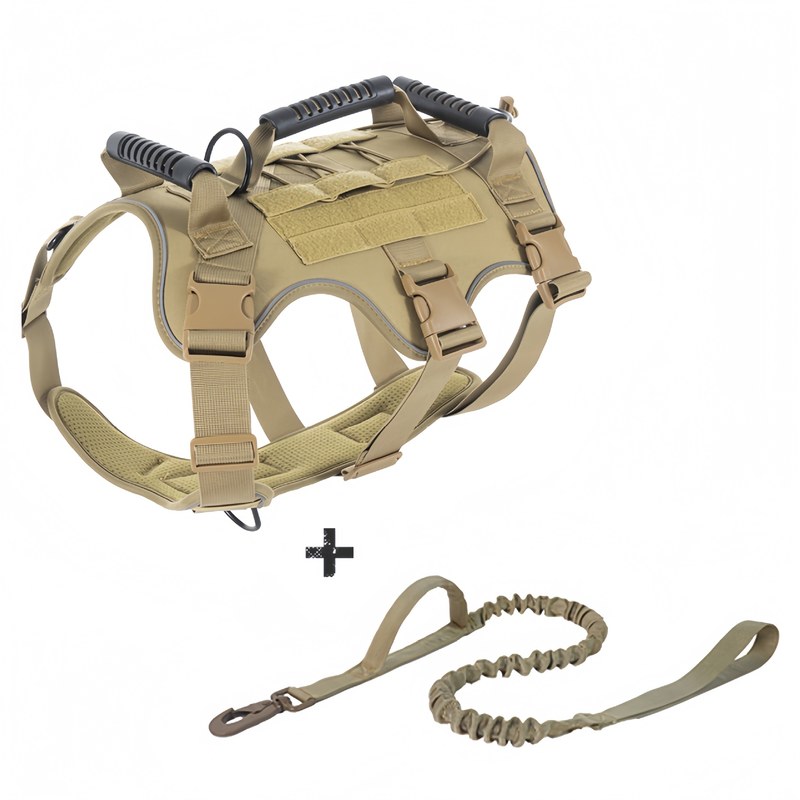
2. What "Tactical Dog Harness" Actually Means for a B2B Order
Definition block — quotable: A tactical dog harness is a vest-style, load-bearing dog harness built from woven nylon or polyester webbing and fabric, with four-point size adjustment, padded chest and back panels for load distribution, top grab handles for physical control, a no-pull leash attachment system, and MOLLE or hook-and-loop panels for modular pouches and ID patches. It is designed for working dogs and large breeds — and, in consumer channels, for owners who want professional-grade control and durability.
Every serious RFQ we receive covers the same six decisions. If you answer these six before requesting a quote, you will get an accurate price on the first reply instead of three rounds of vague numbers:
- Style — vest-style tactical harness (this guide), or lighter step-in and H-frame designs for small dogs.
- Size run — which weight bands you stock; M/L/XL covering 15–60 kg is the standard professional run.
- Control features — one or two grab handles, back and/or front leash points, V-ring position.
- Modularity — MOLLE rows, hook-and-loop patch panel, bungee cord routing, pouch compatibility.
- Branding — woven label, rubber or embroidered patch on the panel, printed hardware, packaging.
- Bundle configuration — harness only, 2-piece with bungee leash, or 3-piece with matching collar.
3. No-Pull by Design: Why Vest-Style Beats Everything Else
"No-pull" is often marketed as a front clip. The engineering reality is broader: a harness stops pulling when it redirects leash force from the throat to the chest — the strongest, least sensitive part of a dog's body. That is a structural decision, not a hardware one. Three constructions dominate the market, and they serve very different buyers:
| Construction | How It Handles Pulling | Best For | Wholesale Positioning |
|---|---|---|---|
| Vest-style tactical | Full chest-and-back plate distributes force; leash ring low on the chest discourages the pull reflex; handles add instant physical control | Large breeds, working dogs, outdoor and professional channels | Premium tier — highest perceived value, strongest margin room, accessory ecosystem |
| Standard walking harness | Front-clip ring redirects force; thin straps concentrate pressure | Mainstream pet retail, small-to-medium dogs | Mid tier — price-driven, high volume, little differentiation |
| Step-in / mesh | Comfort priority; little pulling authority | Small dogs, fashion and comfort segments | Entry tier — low unit cost, crowded, seasonal |
The vest-style tactical layout wins the professional channel because control is layered: the chest plate spreads load, the low leash ring converts a lunge into a lean, and the dual grab handles let a handler steady or lift the dog instantly — which is exactly what service-dog handlers, trainers and K9 dealers ask for. For consumer channels, the same features read as quality cues: thick padding, metal-grade hardware, adjustable webbing everywhere. One chassis sells into both markets, which is why we build this configuration as our factory-direct anchor SKU.
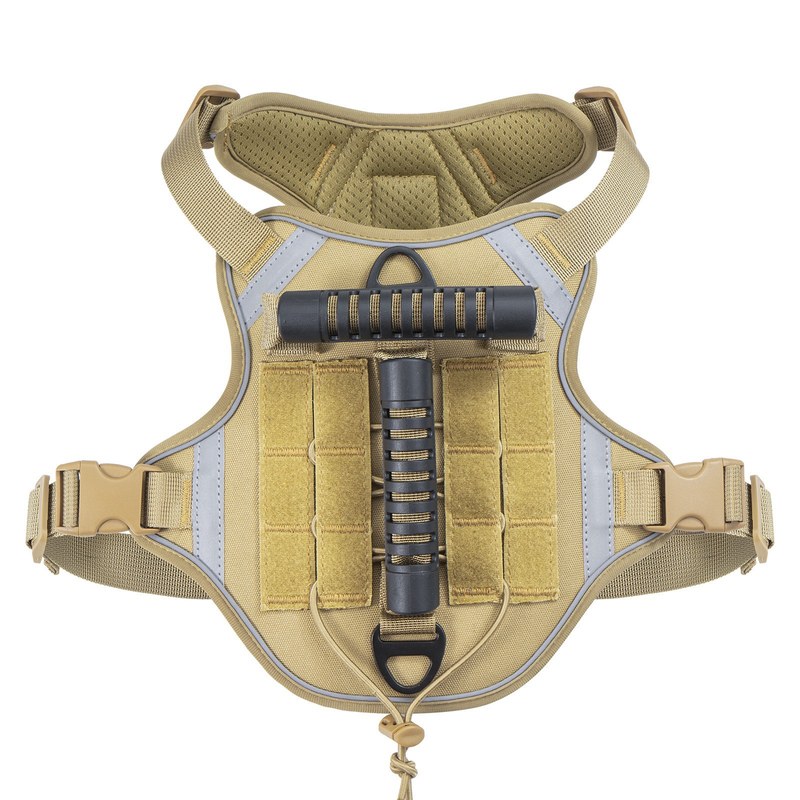
4. Inside the Factory: How a Vest-Style Harness Is Actually Built
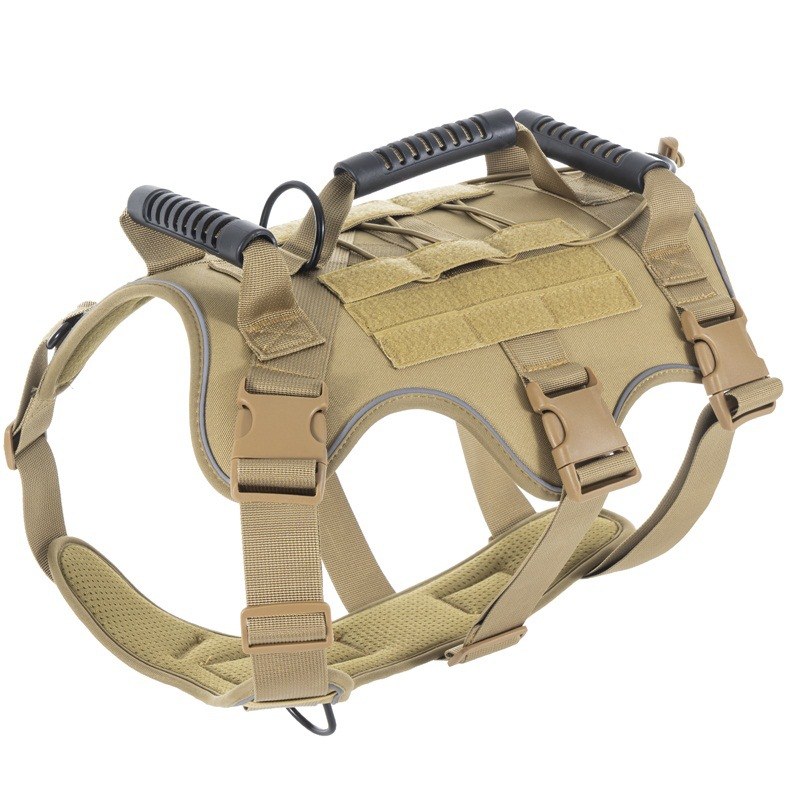
We sew dog harnesses on our own production line in Guangzhou's Huadu district, on the same floor that builds our tactical vests and MOLLE pouches — which is why the webbing spec, hardware grade and QC standard match across a mixed purchase order. A vest-style harness concentrates its build quality in a handful of seams that most product photos never show. Here is where to look when you evaluate any supplier's sample:
- Handle anchoring — each grab handle is attached with box-X bar tacks through the harness frame, not just the shell fabric; a handle that will be pulled with the dog's full bodyweight behind it lives or dies here.
- Adjustment strap sandwich — the four adjustable points are two-layer webbing sandwiches with sliders and side-release buckles; stitch density on these rows decides whether the size setting survives a strong dog.
- Panel stitching — the MOLLE and loop panel rows are sewn through the reinforcement layer; double-needle rows keep the patches mounted square after a year of swaps.
- Chest and back padding — breathable mesh liner bonded over EPE foam, with bound edges so the padding cannot shift or fold under load.
- Load hardware — the V-ring and buckle stress points are bar-tacked; buckles are impact-resistant POM with metal D-rings at leash positions.
- Bungee routing — on corded models, the shock-cord channel is sewn as a closed track with a cord-lock outlet, so the cord never rides on the dog's coat.
- Reflective trim — stitched reflective piping along the panel edges is a low-cost upgrade that measurably lifts perceived quality in retail listings.
This is also why the harness line attaches naturally to the rest of a program: the webbing, thread and hardware spec are shared with our vests, chest rigs and pouches, so a distributor can run a mixed PO across categories and still get matched color and stitching quality. One factory, one QC standard, one shipment.
5. Size Runs and Fitting: The Detail That Decides Your Return Rate
In harness retail, returns and negative reviews rarely come from quality failures — they come from wrong size selection. Professional suppliers solve this in two places: a clean size run, and a fit guide that travels with the product. Our standard run covers the dogs that actually need tactical gear:
| Size | Dog Weight | Typical Breeds | Adjustment |
|---|---|---|---|
| M | 15–30 kg | Border Collie, Australian Shepherd, smaller Labradors | 4-point adjustable |
| L | 30–45 kg | Labrador, German Shepherd, Golden Retriever | 4-point adjustable |
| XL | 45–60 kg | Rottweiler, Malinois, large shepherds and mastiff types | 4-point adjustable |
Two rules we bake into every program. First, sizing is by weight plus chest girth — never by breed name alone — and the fit instruction ("measure the widest point of the chest, allow two fingers under each strap") should be printed on the retail card, not buried in a listing paragraph. Second, mixed-size cartons are the wholesale default: a distributor opens the run with all three sizes across all colorways inside one PO, watches which bands move first in their market, and reorders depth where it sells. Suppliers who force full-size packs per carton are optimizing their warehouse, not yours.
6. The OEM Customization Checklist
For private-label buyers, the tactical harness is the most visible branding surface in the entire leash-and-harness category, because the loop panel sits on the dog's back in every photo. These are the customization points we confirm before sampling — use this list in your own RFQ to any supplier:
| Customization Point | Options | Why It Matters |
|---|---|---|
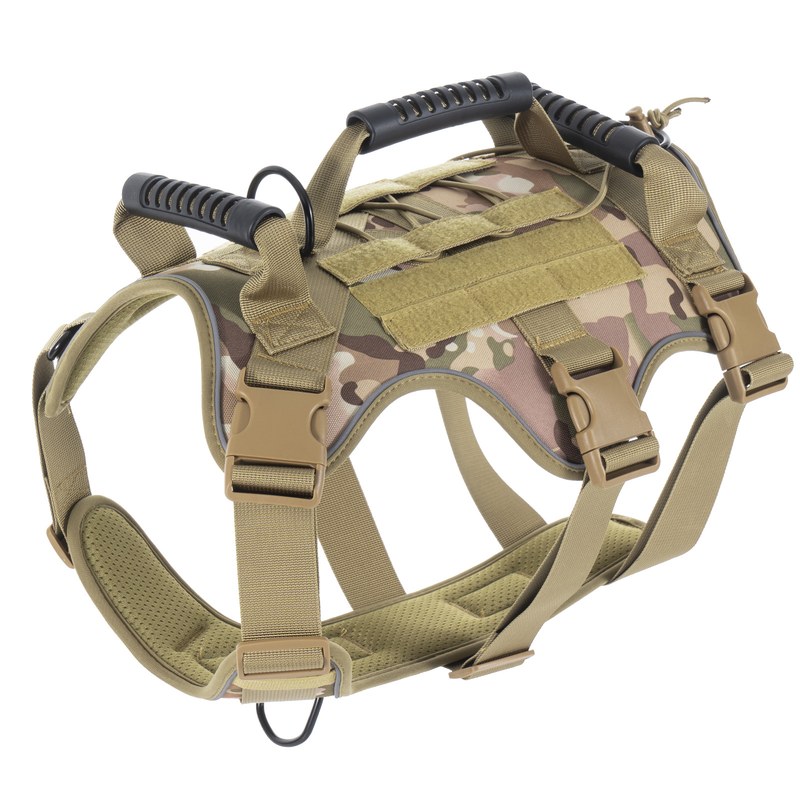
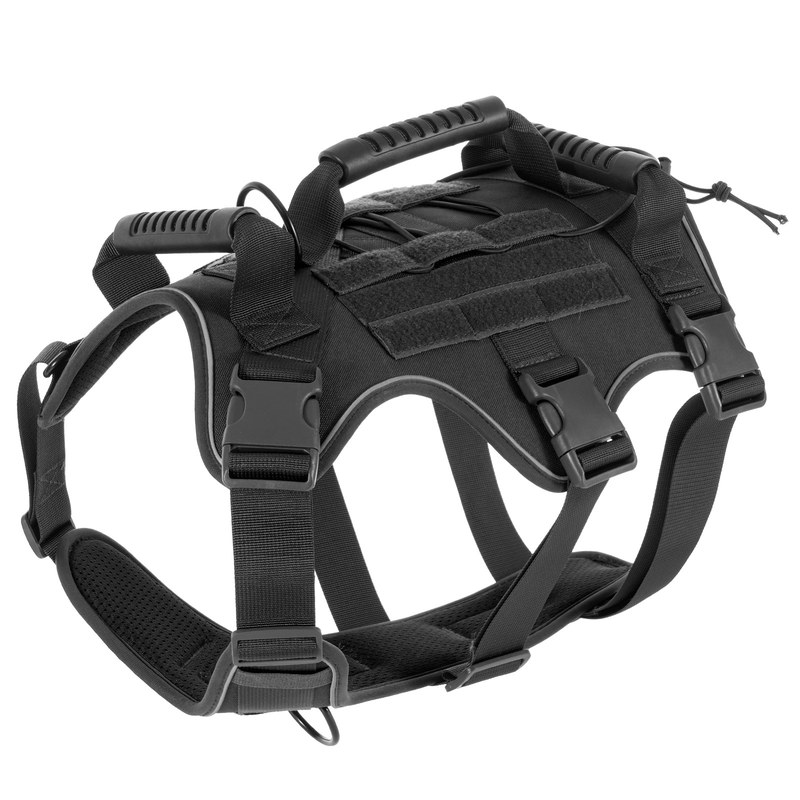
| Shell colorway | Coyote brown, MultiCam camo, Ranger green, black, buyer Pantone | Color must be locked against the approved sample before bulk, webbing included |
| Patch branding | Woven, rubber or embroidered hook-and-loop patch; buyer patch shipped loose or pre-mounted | The patch panel is the most-seen surface — it is your billboard on every walk |
| Logo methods | Woven label at the chest strap, printed hardware, laser mark on buckles | Different methods change unit cost and the branding mock-up you show retailers |
| Bundle configuration | Harness only, 2-piece with shock-absorbing bungee leash, 3-piece with matching collar | Sets lift basket size; the leash and collar reuse the same webbing and color spec |
| Fit card and packaging | Printed size guide, polybag with barcode, hang tag, retail box | The fit card is your return-rate insurance; clear packing rules keep mixed POs clean |
7. MOQ, Samples, Lead Time and Price Drivers
Dog harnesses run on the same order mechanics as the rest of a tactical program, with one difference worth knowing: the market band for tactical harnesses is wider than for pouches, because bundle configurations change the work content. Our standard terms sit right in the factory-direct band:
- MOQ — from 200 pieces per colorway depending on customization depth; logo-patch programs run lower than full private-label builds. Mixed sizes and mixed colorways are accepted inside one PO, which is how a distributor opens a four-color, three-size family from a single purchase order.
- Samples — 3–5 days for a standard-config sample with your logo mock-up; sample cost credited against bulk.
- Bulk lead time — 15–25 days after sample approval, depending on colorway count and branding methods.
- Industry reference — published wholesale guides put tactical dog harness MOQs at roughly 300–500 pieces and factory pricing from about USD 7–15 per unit, so quotes far below that band deserve skepticism about fabric weight and hardware grade.
What actually moves the unit price: shell fabric weight and coating, hardware grade (standard buckles versus impact-tested POM with metal rings), branding method (patch versus woven label versus printed hardware), and bundle configuration (harness only versus 2- or 3-piece sets). Ask any supplier to break the quote into those four lines — the discipline of the answer tells you as much as the number.
8. Six QC Checks to Write Into Your Purchase Order
Whatever factory you work with, these are the checks that separate a professional harness from a marketplace special. We run all six on every bulk lot; copy them into your PO regardless of supplier:
- Handle pull test — vertical static pull on both grab handles across sampled units; box-X tacks hold, no seam stretch, no shell distortion.
- Buckle cycle test — 50 open-close cycles per buckle on sampled units; engagement stays crisp, no stress whitening at the hinge.
- Adjuster slip test — straps loaded to simulate a pulling dog; the size setting must not creep under sustained load.
- Stitch density audit — consistent stitches-per-inch on load seams; zero skipped stitches on bar tacks at handles, V-ring and buckles.
- Color consistency check — bulk shell versus approved sample under daylight, including webbing, binding and patch panel match across all colorways in the PO.
- Hardware function — V-ring deformation check and slider action on 100% of units; reflective trim intact along every panel edge.
9. Our No-Pull Vest Harness: Factory-Direct Configuration
Our current factory-direct program is the Tactical Dog Harness — No-Pull Vest-Style Harness with Dual Grab Handles (WH-DH01) — the configuration this guide describes, in four colorways and three sizes:
Configuration summary: vest-style no-pull chassis with chest-and-back load distribution · dual rubberized grab handles, box-X anchored · full hook-and-loop patch panel with MOLLE webbing rows · four-point size adjustment (M 15–30 kg / L 30–45 kg / XL 45–60 kg) · padded breathable mesh liner · V-ring and leash attachment points · shock-cord routing with cord lock · reflective piping · 1000D-style woven polyester shell with bar-tack stitching at every stress point · four colorways (Coyote Brown, MultiCam Camo, Ranger Green, Black) · order as harness only, 2-piece with bungee leash, or 3-piece with matching collar · mixed-size, mixed-color cartons welcome.
Request a sample and a quote → — send your logo file and target colorway list, and we will return a branding mock-up with the sample.
10. FAQ
What is a tactical dog harness?
A tactical dog harness is a vest-style, load-bearing harness for medium and large dogs — four-point adjustable, with padded chest and back panels, top grab handles, a no-pull leash attachment system, and MOLLE or hook-and-loop panels for pouches and ID patches. It is built for working dogs and large breeds, and in consumer channels it sells on the same visible construction quality.
What does "no-pull" actually mean on a harness?
It means the harness redirects leash force away from the throat and onto the chest, where a dog cannot gain traction by leaning. On a vest-style tactical harness this comes from the load-spreading plate and a low leash ring — structure, not just a front clip. Dual grab handles add instant physical control for training and working scenarios.
Which harness size should I order for my dog?
Size by weight plus chest girth, never by breed name. Our run is M for 15–30 kg dogs, L for 30–45 kg, XL for 45–60 kg, all four-point adjustable. Measure the widest point of the chest and allow two fingers under each strap — the fit guide ships on the retail card with every unit.
What is a typical MOQ for wholesale tactical dog harnesses?
Industry guides put tactical harness MOQs at roughly 300–500 pieces per style. Our factory-direct terms start from 200 pieces per colorway depending on customization depth, with mixed sizes and mixed colorways accepted inside one PO.
Can I put my own brand on a tactical dog harness?
Yes — the hook-and-loop patch panel is the most visible branding surface in the category. We support woven, rubber and embroidered patches (pre-mounted or shipped loose), woven labels on the chest strap, printed hardware, fit cards and retail packaging. Send your logo file with the RFQ and we return a branding mock-up with the sample.
Work With the Factory, Not the Middle Layer
WildHawk sews tactical vests, chest rigs, MOLLE pouches and working-dog gear on its own Huadu production line in Guangzhou — one webbing spec, one hardware grade, one QC standard across the whole program, and mixed-category POs welcome. If you are building a dog harness line for 2026, start with the no-pull vest chassis and a factory that can show you the seams.
Start a Dog Harness RFQ